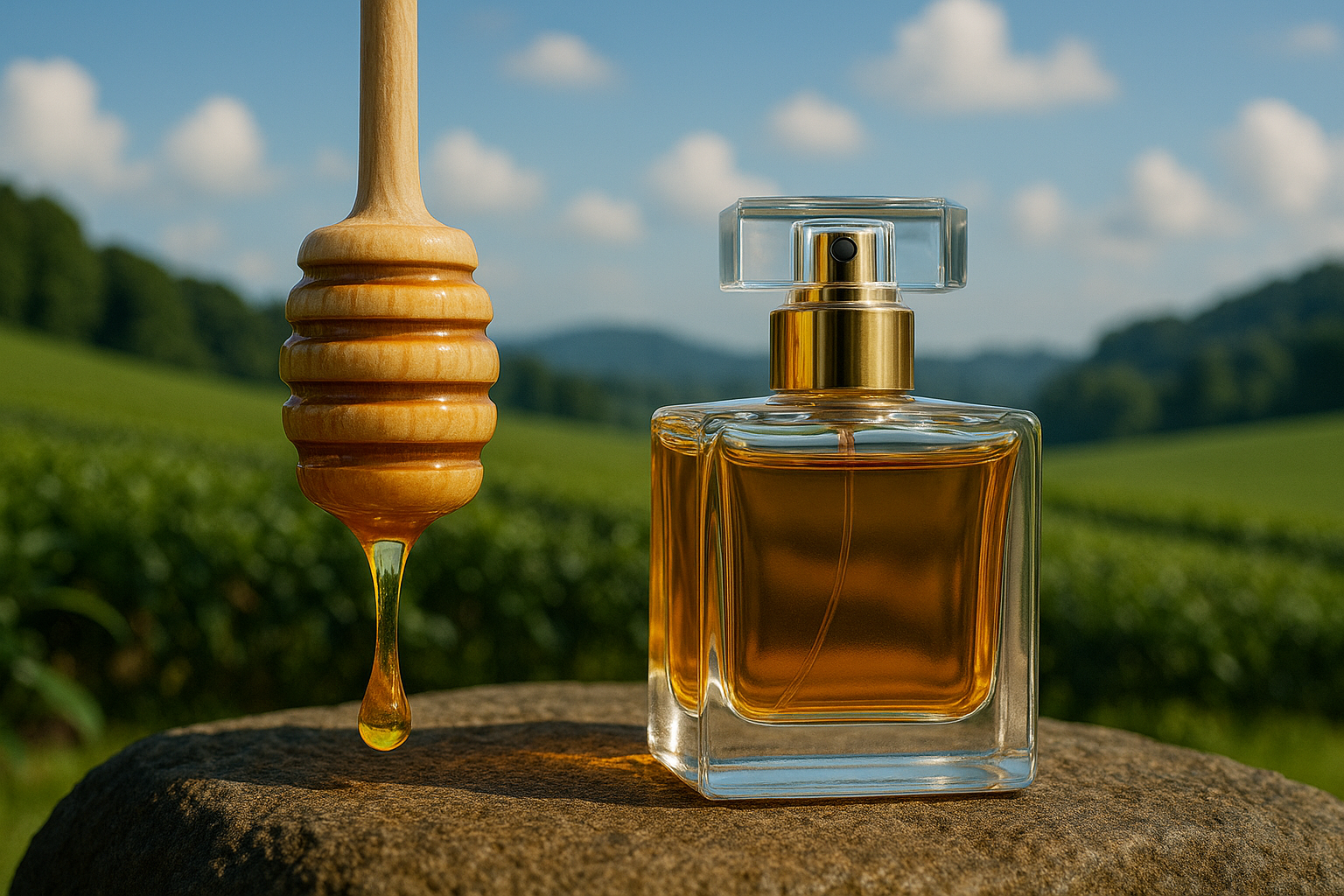
Few natural ingredients evoke warmth, comfort, and sensuality quite like honey. With its golden hue and rich sweetness, honey has been treasured for centuries—not just as a food, but as a symbol of luxury and indulgence. In perfumery, the honey note adds a velvety depth that can range from floral and gourmand to animalic and provocative, depending on how it’s used.
Whether derived from nature or recreated through carefully crafted aroma molecules, the honey scent continues to captivate perfumers and perfume lovers alike. It brings a syrupy warmth to florals, enhances the richness of amber accords, and adds a seductive quality to bold, daring compositions. In this guide, we’ll explore everything you need to know about the honey scent in perfumery—from its olfactory profile and synthetic recreations, to the best honey-based perfumes and how to layer them effectively.
What Does Honey Smell Like?
The scent of honey is instantly recognizable—sweet, thick, and comforting. But its true complexity often surprises those who explore it more deeply. At its core, honey carries a syrupy, floral sweetness, but depending on its origin and how it’s used in perfumery, it can reveal unexpected layers: waxy, powdery, balsamic, or even slightly animalic.
Natural honey’s smell is heavily influenced by the nectar source. For example:
- Orange blossom honey has a fresh, citrusy floral tone.
- Acacia honey is lighter and more delicate.
- Wildflower honey is bold and multifaceted, often darker and more aromatic.
In perfumery, honey notes can be:
- Bright and golden, evoking warmth and sunlight.
- Dark and resinous, adding a sensual, mature depth.
- Animalic or musky, when used in high doses or blended with materials like beeswax, civet, or castoreum.
This wide spectrum of scent makes honey incredibly versatile. It can lend a soft, romantic sweetness to a floral bouquet or act as a sultry base note in rich, opulent fragrances. Its dual nature—innocent and indulgent—gives perfumers creative freedom to use it in everything from cozy comfort scents to provocative powerhouses.
Olfactory Profile and Fragrance Family
In the world of perfumery, honey is typically classified as a sweet, gourmand, or amber note, but its multidimensional nature allows it to straddle several fragrance families. Depending on how it’s composed and what it’s paired with, honey can lean toward floral, oriental, or even animalic categories.
Core Characteristics of Honey in Perfumery:
- Sweet and syrupy: Mimics the thick, sugar-rich nature of real honey.
- Waxy or balsamic: Reminiscent of beeswax or propolis, often used to deepen the honey effect.
- Floral undertones: Particularly when the accord includes mimosa, orange blossom, or jasmine.
- Animalic edge: In higher concentrations, it can produce a slightly musky, provocative nuance.
Common Aroma Chemicals Used to Evoke Honey:
Because real honey is difficult to use in fragrance (due to its instability and stickiness), perfumers often rely on synthetic or natural aroma molecules that replicate its smell:
- Phenylacetic acid: Provides a sweet, floral-honey smell.
- Coumarin: Adds warmth and an almond-vanilla sweetness.
- Mimosa absolute or beeswax absolute: Lends a powdery or waxy dimension to the accord.
- Ethyl phenylacetate: A fruity-floral note often used to mimic the brightness of light honey.
Blending Partners That Enhance Honey Notes:
Honey is rarely used alone—it shines best in layered compositions. Some of the most compatible notes include:
This versatility is what makes honey so beloved in niche and commercial perfumery alike: it adds body, roundness, and emotional warmth to a fragrance, making it feel both timeless and indulgent.
Popular Perfume Types That Feature Honey Notes
Honey is one of the most transformative ingredients in perfumery, lending itself beautifully to a variety of fragrance styles. Depending on the formulation, it can add a comforting sweetness, a floral richness, or even an animalic intensity. Below are the most common perfume types where honey plays a starring or supporting role:
1. Gourmand Perfumes
In gourmand fragrances, honey often enhances edible notes like vanilla, caramel, or tonka bean. It contributes to the dessert-like richness that defines this category.
- Honey adds a golden, syrupy sweetness without being overly sugary.
- Works well with notes like almond, praline, and dried fruits.
2. Floral Perfumes
Honey naturally complements floral notes, particularly orange blossom, rose, and jasmine. In these compositions, it provides warmth and depth while preserving the elegance of the bouquet.
- Honey makes florals feel creamier, more sensual, and often more long-lasting.
- Common in both romantic and exotic floral perfumes.
3. Amber and Oriental Fragrances
Amber-style perfumes often use honey to amplify their warmth and opulence. These compositions can be sweet, resinous, and hypnotic, ideal for evening wear.
- Honey blends seamlessly with resins, spices, and balsamic notes like labdanum, benzoin, and myrrh.
- These perfumes tend to be bold, luxurious, and long-wearing.
4. Animalic and Sensual Fragrances
When paired with ingredients like beeswax, civet, or castoreum, honey takes on an animalic quality—earthy, slightly sweaty, and deeply seductive.
- Often used in niche or vintage-style perfumes.
- Adds a feral, provocative edge while still retaining sweetness.
5. Chypres and Leather-Based Fragrances
In certain leather or tobacco fragrances, honey balances the dryness with a subtle sweetness.
- A classic pairing: honey + tobacco for a rich, smoky, and addictive scent profile.
- Honey also softens harsh edges in dry woods or spicy leather compositions.
Each of these categories uses honey differently, showcasing its unique ability to enhance complexity, create contrast, or bind multiple elements into a cohesive whole.
Best Honey-Based Perfumes to Explore
If you’re curious to experience how honey works in perfumery, there are several standout fragrances—both mainstream and niche—that showcase its many facets. From light floral-gourmands to dark, resinous powerhouses, honey plays a key role in creating memorable scent experiences.
1. Jean Paul Gaultier – Scandal
- A bold, sultry blend of honey, orange blossom, patchouli, and caramel.
- Intensely sweet and attention-grabbing with a seductive, night-out vibe.
- Ideal for fans of strong gourmands with a provocative edge.
2. Serge Lutens – Miel de Bois
- A polarizing honey and woods composition—some find it alluring, others find it animalic.
- Features honey, guaiac wood, iris, and beeswax.
- Raw and primal, perfect for adventurous fragrance lovers.
3. Zoologist – Bee
- An artistic honey fragrance built around beeswax, mimosa, and tonka bean.
- Complex and cozy, evoking the scent of a sun-warmed beehive.
- Balances sweetness with a waxy, resinous texture.
4. L’Artisan Parfumeur – L’Ambre
- Warm and golden, blending amber, honey, benzoin, and a touch of spice.
- Honey adds richness to the ambery, resinous heart.
- Elegant and comforting—ideal for cold-weather wear.
5. Guerlain – L’Instant Magic
- A soft, powdery blend of honeyed almond, white musk, and florals.
- Subtle sweetness with a refined, feminine character.
- A more delicate take on honey for everyday use.
6. Viktor & Rolf – Bonbon Couture
- A gourmand explosion of honey, caramel, vanilla, and peach.
- Honey thickens the already-sweet composition, adding depth and syrupy richness.
- Perfect for those who love dessert-style scents.
7. Papillon Artisan Perfumes – Dryad
- A green-chypre base with hints of honey, oakmoss, and narcissus.
- Honey softens the herbal sharpness, creating a mysterious forest-like sweetness.
- A hidden gem for lovers of complex, nature-inspired blends.
Each of these perfumes illustrates how honey can be sweet and charming—or daring and provocative—depending on how it’s used. Whether you’re a fan of light florals, warm ambers, or dark, smoky accords, there’s a honey-based fragrance that fits your mood.
Honey Scent in Niche and Artisan Perfumery
Niche and artisan perfumers are known for pushing the boundaries of traditional fragrance creation—and the honey note is no exception. While mainstream brands often use honey for its universally appealing sweetness, niche houses explore its more nuanced, raw, and even challenging facets.
Raw and Natural Interpretations
Many indie perfumers work with natural materials like beeswax absolute, mimosa, and propolis tinctures to create more realistic and textural honey effects:
- These perfumes often evoke actual beehives, complete with waxy, pollen-like, and resinous elements.
- They may incorporate herbal, woody, or smoky notes to enhance the realism and complexity.
Examples:
- Hiram Green – Slowdive: A warm blend of honey, tobacco, dried fruits, and orange blossom that feels like a lazy summer afternoon.
- April Aromatics – Nectar of Love: Uses real honey extract blended with rose, neroli, and oud for a luxurious, natural profile.
Conceptual and Artistic Approaches
Some niche brands use honey to explore themes of decay, sensuality, or animal magnetism, venturing far beyond the typical sweet profile.
- Zoologist Bee, for example, is designed to smell like a hive—not just honey, but wax, pollen, and even the warmth of sun on fur.
- Aftelier Perfumes and DSH Perfumes also create artistic honey-themed fragrances that defy categorization.
Why Niche Brands Use Honey Differently
- Freedom from commercial constraints allows perfumers to showcase honey’s darker or stranger facets.
- These scents often focus on atmosphere and emotion, turning honey into a storyteller rather than just a sweetener.
- Small-batch production means more experimentation with rare or expensive naturals.
For those who want more than just sugar-sweetness, niche honey perfumes offer a rich world of olfactory artistry—earthy, intimate, complex, and sometimes completely unexpected.
Who Will Love Honey-Based Fragrances?
Honey-based fragrances aren’t for everyone—but for the right wearer, they offer a deeply satisfying olfactory experience that can feel comforting, sensual, or daring. If you’re unsure whether this note is for you, consider the following preferences and personality traits that often align with a love for honey in perfumery:
1. Lovers of Sweet, Cozy Scents
- If you gravitate toward warm, gourmand, or dessert-like perfumes, honey will likely appeal to you.
- It pairs beautifully with vanilla, tonka bean, and caramel—notes often found in cozy, edible-smelling fragrances.
2. Fans of Bold and Sensual Perfumes
- Honey can have an animalic undertone, especially when paired with beeswax, leather, or oud.
- Those who enjoy provocative, lingering, or skin-like scents (think musk or civet) may appreciate honey’s sultry edge.
3. Nature-Inspired and Earthy Fragrance Enthusiasts
- In natural or niche compositions, honey often smells waxy, pollen-like, and organic, evoking meadows, beehives, and sun-drenched woodlands.
- Ideal for people who enjoy botanical or artisanal perfumes that smell like a moment in nature.
4. Cold Weather Fragrance Fans
- Honey performs beautifully in fall and winter—its syrupy richness and warmth create a comforting scent bubble in cooler temperatures.
- Many honey perfumes are long-lasting and enveloping, perfect for layering under scarves or coats.
5. Skin Chemistry Matchmakers
- On the right skin, honey becomes a golden, glowing scent—soft, radiant, and alluring.
- However, those with warmer or oilier skin might find that honey leans more animalic or “feral,” making it worth testing before full commitment.
In short, honey fragrances are best suited for those who appreciate depth, warmth, and personality in their scents. Whether you prefer innocent sweetness or wild sensuality, honey has the flexibility to deliver both.
Layering Ideas: How to Mix Honey with Other Scents
Honey is one of the most versatile layering notes in perfumery. Its rich, golden warmth allows it to enhance and transform other fragrances—whether you’re looking to amplify sweetness, add depth, or soften sharp edges. Here are some creative and effective ways to layer honey-inspired scents with other fragrance types:
1. Honey + Vanilla
- A classic combination for a gourmand effect.
- Vanilla smooths out honey’s edges and creates a comforting, dessert-like aroma.
- Ideal for autumn and winter layering.
2. Honey + Tobacco
- Creates a deep, smoky, and addictive blend.
- Perfect for fans of boozy or vintage-style perfumes.
- Works especially well with woody or spicy base notes.
3. Honey + Rose
- A romantic pairing that adds sweetness and depth to floral compositions.
- Honey softens rose’s sharpness, while rose keeps honey from becoming too syrupy.
- Suitable for both classic and modern floral scents.
4. Honey + Leather
- A bold combination with contrast and character.
- Honey lends sweetness to balance leather’s dry or smoky qualities.
- Great for daring, sensual evening scents.
5. Honey + Citrus
- Lightens honey’s richness and gives it a fresh, uplifting twist.
- Try layering with orange, neroli, or bergamot for a bright floral-honey accord.
- Ideal for warmer weather or daytime wear.
6. Honey + Amber or Resins
- Enhances the warmth and longevity of ambery compositions.
- Great for fans of oriental or incense-style perfumes.
- Adds a glowing, enveloping quality to your scent.
DIY Tip: Use Honey-Based Body Oil or Lotion as a Base
- Apply a light honey-scented oil or lotion before spritzing your perfume to anchor and extend its performance.
- This layering method helps bring out the honey note subtly without overwhelming the composition.
Whether you’re toning down a sharp floral or deepening a light gourmand, honey offers countless possibilities for fragrance layering. It acts as both a sweetener and a binder, making almost any perfume feel richer and more rounded.
Conclusion
From ancient rituals to modern olfactory artistry, honey has remained a beloved and enduring scent in perfumery. Its complexity—simultaneously sweet, floral, waxy, and even animalic—makes it one of the most versatile and emotionally evocative notes in a perfumer’s toolkit.
Honey doesn’t just smell good—it tells a story. It can whisper softness and warmth in a delicate floral blend or roar with primal intensity in a smoky, resinous fragrance. It bridges the gap between nature and indulgence, nostalgia and sensuality, comfort and desire.
Whether you’re a fan of cozy gourmands, elegant florals, or daring niche compositions, the honey note offers something unique to explore. And with a growing number of artisan and mainstream perfumes embracing this golden ingredient, there’s never been a better time to discover what honey can bring to your scent journey.